


Tubular Locking Plates System (TLS)
The ITS. Tubular Locking Plates System has proven its worth in osteosynthesis of various diaphyseal and metaphyseal fractures.
A special feature of this system is the freely selectable hole configuration, which makes it possible to choose locking or non-locking screws for each hole (except compression and oblong holes). With an angle selection of +/- 15°, the system offers particular versatility, especially for complex fractures.


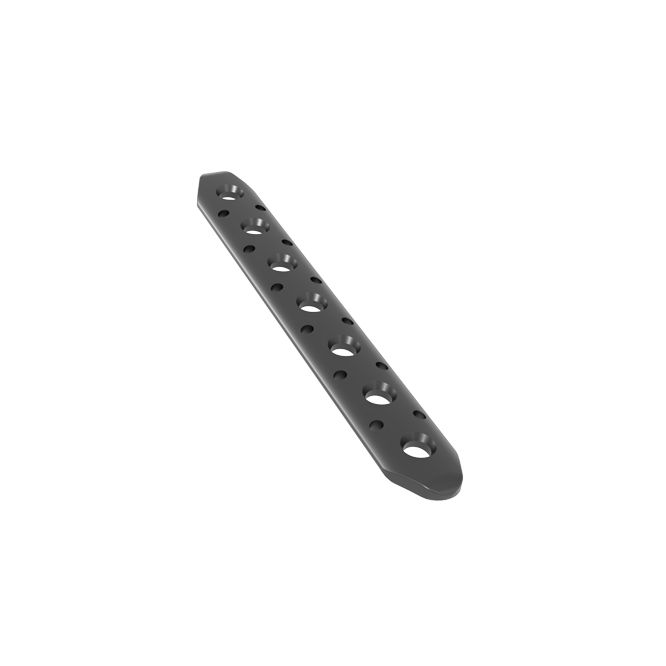
- Anatomically shaped
- K-Wire holes for temporary plate fixation
- 2 plate versions: diaphyseal and distal (multiple points of fixation in the distal area)
- Axial indentations on the rear side of the plate for accurate fitting on the bone
- Tapered plate ends for a smooth insertion under the soft tissue
- Free choice of plate position (lateral, dorsal, ventral)
- Plate lengths distal: 3, 4, 5, 6, 7, 8-hole
- Plate strength distal: 2.0mm (Schaft), 1.5mm (distal)


Hand Locking Plates System (HLS)
The ITS. Hand Locking Plates System is a trusted osteosynthesis solution, offering a variety of plate types to address a range of hand fractures.
A special feature of this system is the freely selectable hole configuration, which makes it possible to choose locking or non-locking screws for each hole (except compression and oblong holes). With an angle selection of +/- 15°, the system offers particular versatility, especially for complex fractures.


- Multi-directional Locking
- Minimization of soft tissue irritation due to anatomical plate design
- Various plate types and lengths
- Plate strengths: 1.0mm & 1.5mm
- Sliding hole with compression option (to create tension)
- T-Shape Extended: Oblong hole for additional correction of the rotational axis



Pelvic Reconstruction System Phoenix (PRSPHX)
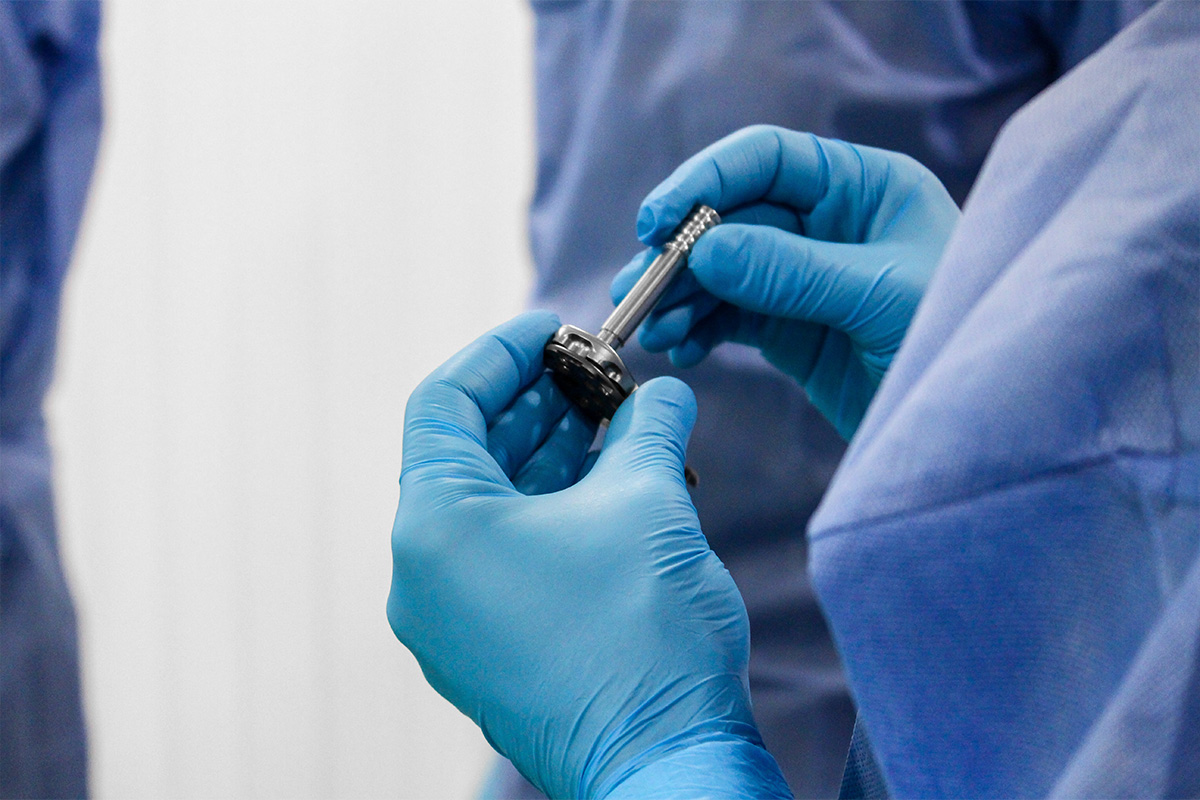
The ITS. Pelvic Reconstruction System – Phoenix is a third generation comprehensive system for the treatment of different fractures of the pelvis, including pelvic ring injuries and fractures of the acetabulum. Adhering to the technology principles of all ITS. plates, this system offers anatomically pre-contoured plates with polyaxial locking capabilities.


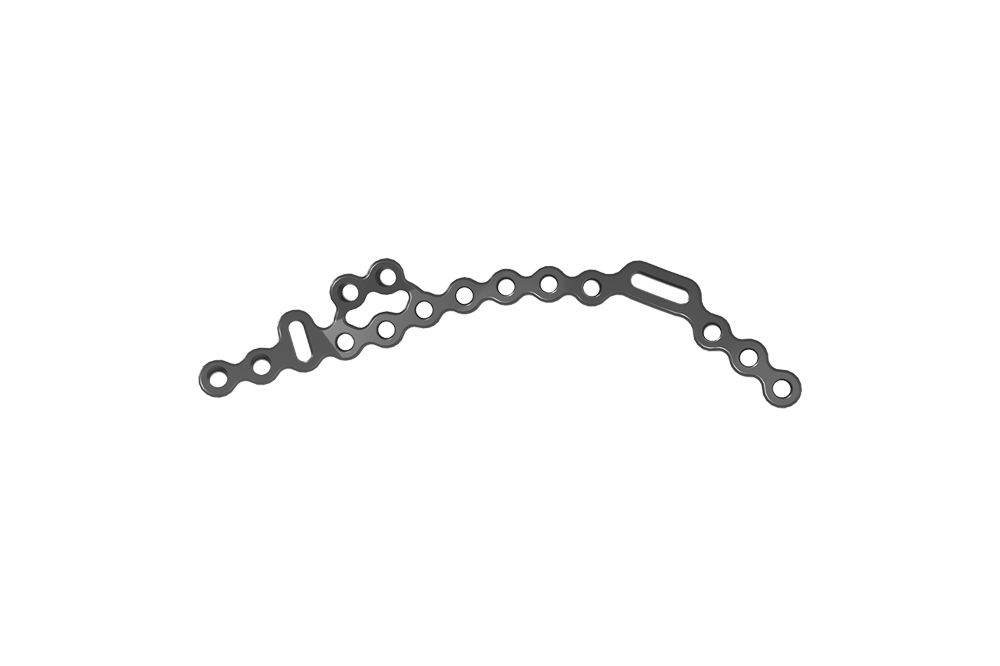


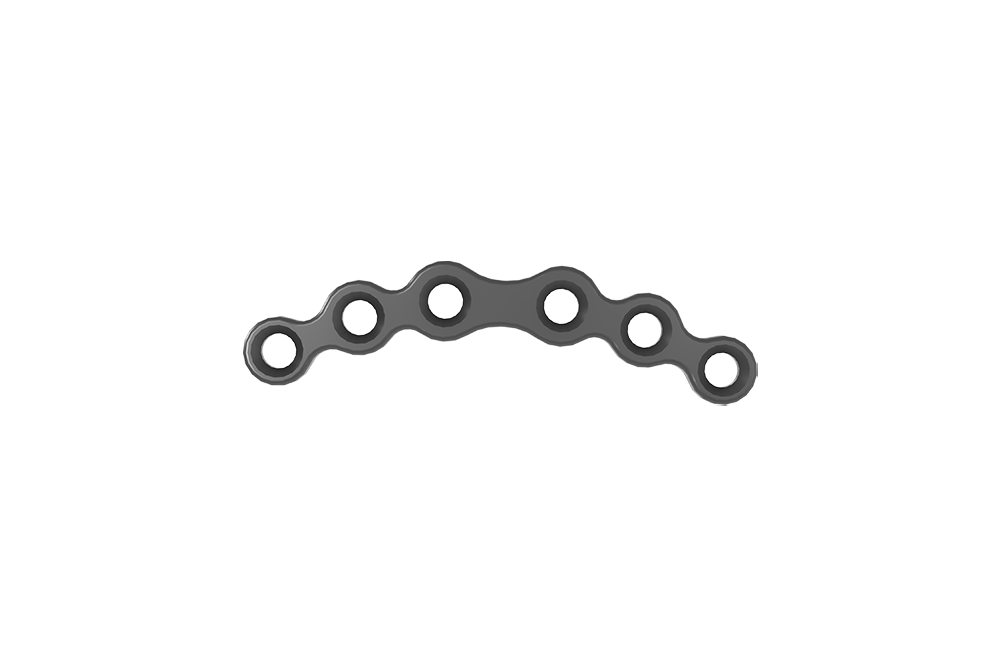
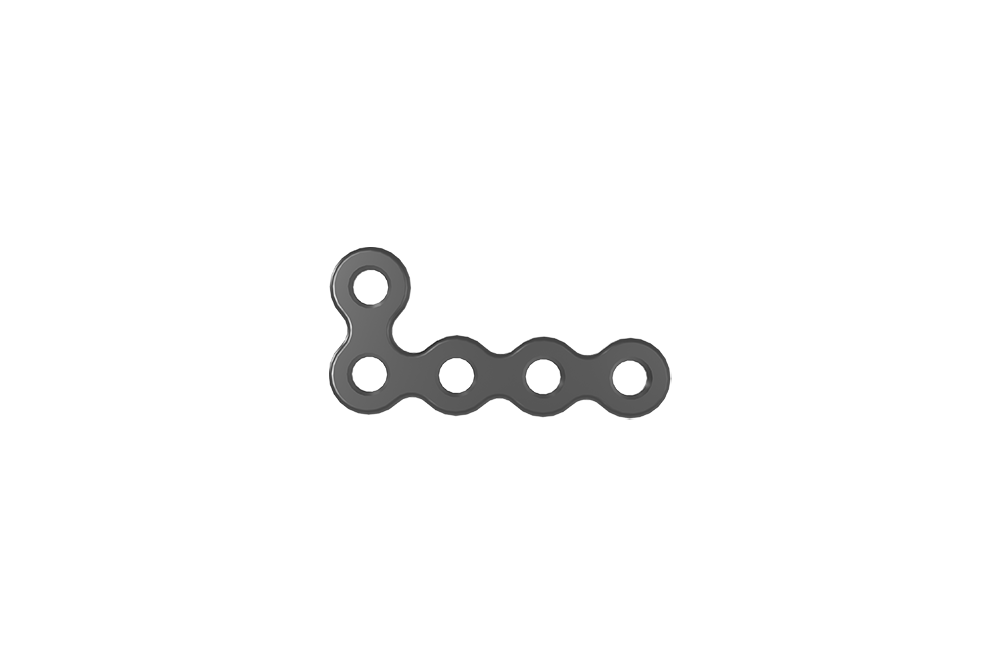

- Multi-directional locking
- Anatomical plate design
- Stoppa approach for ease of plate insertion
- Improved instrumentation for fracture reduction
- Screw hole placement options to enable targeting of high-quality bone


Small Fragment
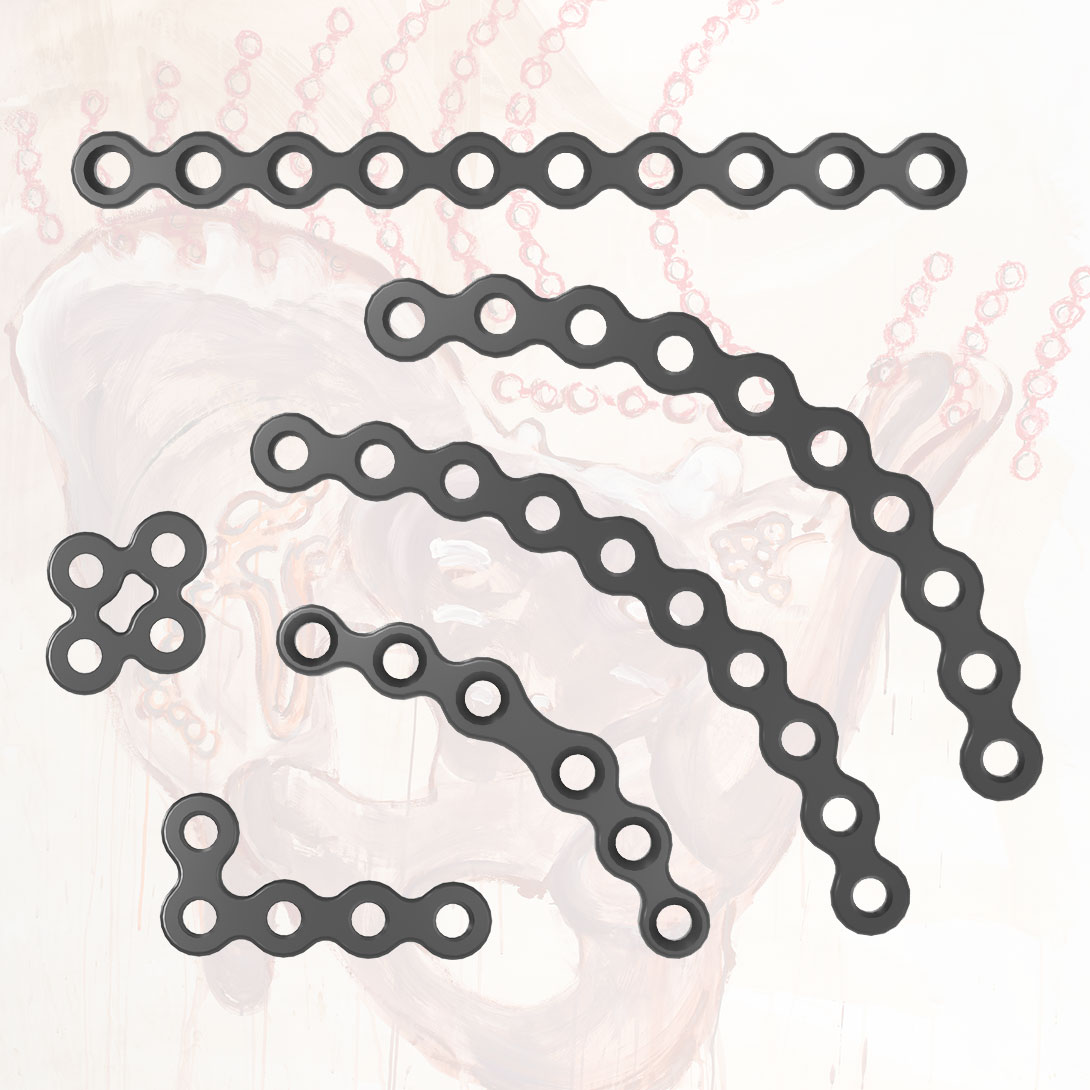
Building on the success of the PRS RX system, our brilliant design team has further developed our small fragment system to include 3 new plates. With this, we do expect to see a preference toward our small fragment system and the anatomically contoured plates.
All three plates come with pre-angled holes (or slots) to allow screw placement from all commonly used anterior approaches.
Large Fragment
The PRS Large Fragment System offers intraoperative flexibility by allowing the surgeon to adapt the plate to the needs of the particular surgery. It incorporates bending plates that are attached to the bone and can be easily adapted to the patient‘s individual anatomy, also for length determination.

Reduction Instrumentation
The new reduction clamps offer versatility and user-friendliness, including partially minimally invasive application. The instrument set has a universal handle and various attachments for different reduction manoeuvres, allowing each arm to be individually positioned and then connected. The crown tip enables direct placement on the bone or on the screw heads to ensure effective transmission of force during fracture reduction.
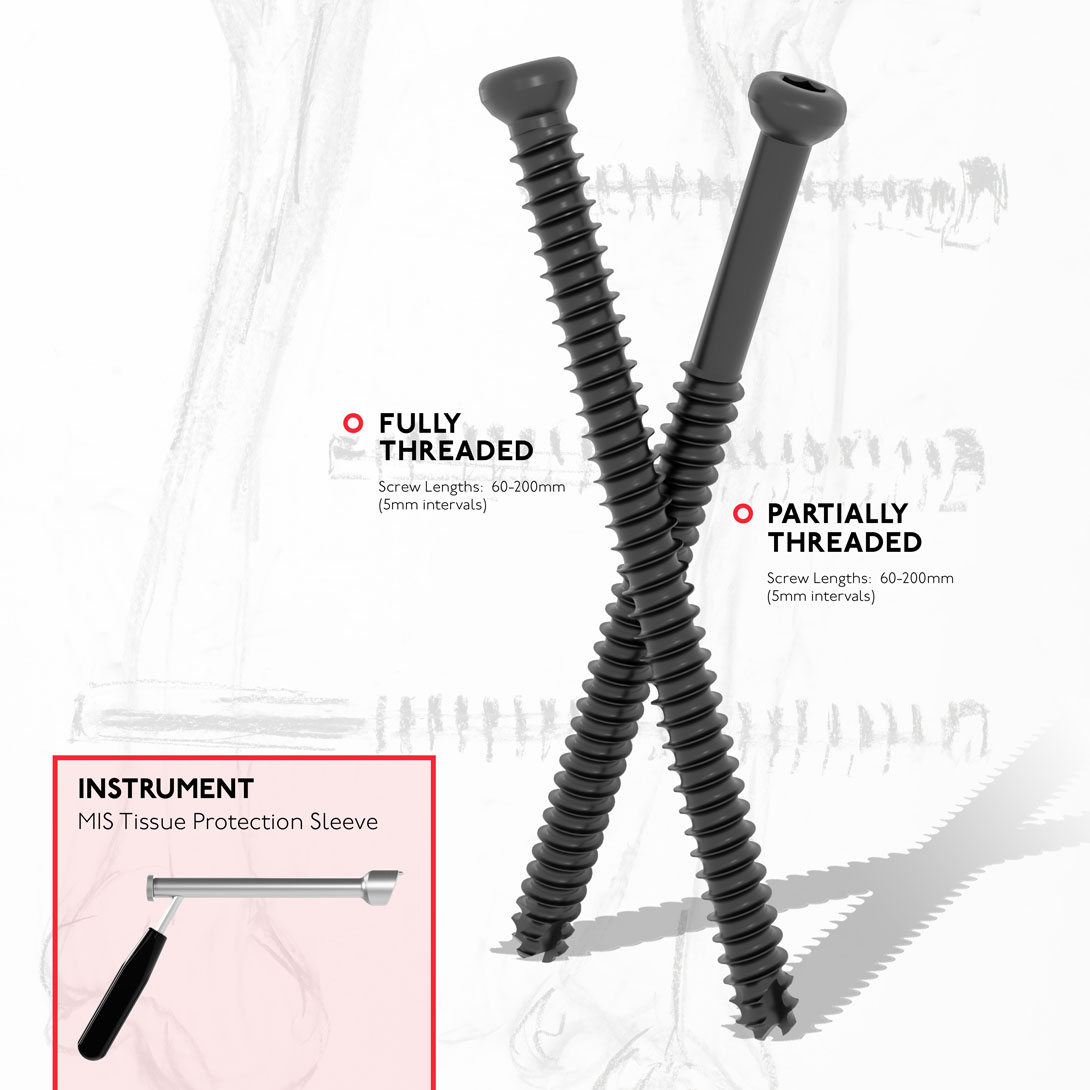
Cannulated 8.5mm Screw
Expanded cannulated screws include SI joint connection and fragment stabilization. New 8.5 mm screws minimize soft tissue irritation, suitable for minimally invasive and open approaches. Includes washers for improved bone contact, especially in osteoporotic bone.


HIP-G – Proximal Femur
The ITS. HIP-G Proximal Femur is based on proven concepts of intramedullary nailing and integrates modern standards for fracture care. The HIP-G nail features innovative technologies such as controlled dynamization and enhanced rotational stability, providing optimal treatment for proximal femur fractures.


Building on Prof. Küntscher’s proven concepts and decades of fracture care advancements, the ITS. HIP-G – Proximal Femur prioritizes patient safety with patented DyCon® technology, integrated navigation aids, and intuitive techniques — providing a comprehensive solution for proximal femur fractures.


Proximal Features
- Easy-to-use, built-in targeting guides to aid k-wire placement
- 2 portal approach providing rotational stability both intra- and post-operatively
- Inferior set screw allowing for controlled dynamization
- Built-in closing of the fracture gap and compression of fracture
The HIP-G Proximal Femur System offers three different set screw options, providing maximum flexibility in surgical application. This allows the surgeon to select the optimal configuration according to the clinical situation, bone quality, and personal preference.
Option 1
Option 2
Option 3


Axial Set Screw
The axial set screw can be used alone or in combination with the DyCon® set screw. If used alone, the medial movement of the lag screw is blocked and the lateral movement is free depending on the remaining groove length of the lag screw.

Dynamization Control
The Inferior DyCon® Set Screw anchors into the nail and engages a groove in the Lag Screw, enabling controlled lateral dynamization and preventing medial migration with full contact.
While 5mm lateral dynamization is standard, this design allows scalable lag screw movement from 0mm (static) to 10mm (dynamic+).

Ensures maximum stability with no lateral movement, suited for fractures that require rigid fixation.
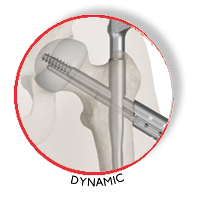
Allows up to 5mm of controlled lateral movement, limiting the Femoral Neck Shortening to an area of “no” or “mild” inferior influence to the hip function.

- Provides up to 10mm of movement for enhanced dynamization, i.e. for complex or unstable fractures requiring more collapse to foster bone healing.


Sacral Rods (SR)
The ITS. Sacral Rods offer a proven fixation method for posterior pelvic ring instability, particularly in sacral fractures and SI joint fusions. Their stability has been proven in numerous studies and they are often considered the “gold standard” in treatment.
In type C injuries, ventral plate osteosynthesis is performed first, followed by posterior stabilization, which can be performed either in the same session or as a second procedure.
The new, sophisticated instrumentation enables a standardized and simplified application technique.

- Threaded rods with washers and locknuts for ilio-iliac compression osteosynthesis
- Simple and safe operative technique
- Low possibility of iatrogenic injury to neural structures
- Stepped thread to increase fatigue strength
- Socket spanner system with AO standard adapter for fast and simple fastening of nuts


Distal Femur Locking System (DFL)
The Distal Femur Locking System enables the medical treatment of joint fractures. The optional minimally invasive technique provides a gentle treatment alternative that supports faster healing and less post-operative stress. Close to the joint, the system offers the option of working with or without a target system.
A special feature of this system is the freely selectable hole configuration, which makes it possible to choose locking or non-locking screws for each hole (except compression and oblong holes). With an angle selection of +/- 15°, the system offers particular versatility, especially for complex fractures.


- Multi-directional Locking
- Anatomical plate design
- Radiolucent handle and drill block close to joint
- Extraction instrument for easier reposition
- Version left/right
- Plate lengths: 4, 6, 8, 10-hole


Epiphysis Screw (ES)
The ITS. Epiphysis Screw is designed for the treatment of Slipped Capital Femoral Epiphysis (SCFE). Its minimally invasive approach uses a central screw that preserves blood flow to the femoral neck and reduces the risk of joint perforation.
The screw stabilizes the femoral head for partial weight-bearing and features a short thread that acts as a tension screw without penetrating the joint. Its large screw head prevents bony ingrowth and allows easy percutaneous removal, avoiding open surgery.


- Cannulated Cancellous Tension Screw with constant 10mm thread
- Core diameter 5mm
- Outer diameter 6.5mm
- Lengths: 50 – 120mm in 5mm steps
- Cannulation: 3.5mm for D=3.2mm Guide Wire
- Selfdrilling & selftapping
- Back-tapping flank
- Large screw head: WS 10mm, 10mm height
- Large countersink head for easy removableness (funnel: D=7.5mm / 30°)


Proximal Lateral Tibia Locking Plate (PTL)
The Proximal Lateral Tibia Locking Plate enables the medical treatment of joint fractures. The optional minimally invasive technique provides a gentle treatment alternative that supports faster healing and less post-operative stress. Close to the joint, the system offers the option of working with or without a target system.
A special feature of this system is the freely selectable hole configuration, which makes it possible to choose locking or non-locking screws for each hole (except compression and oblong holes). With an angle selection of +/- 15°, the system offers particular versatility, especially for complex fractures.


- Multi-directional Locking
- Anatomical plate design
- Radiolucent handle and drill block close to joint
- Extraction instrument for easier reposition
- Version left/right
- Plate lengths: 4, 7, 12, 17-hole


Proximal Medial Tibia Locking Plate (PROMET)
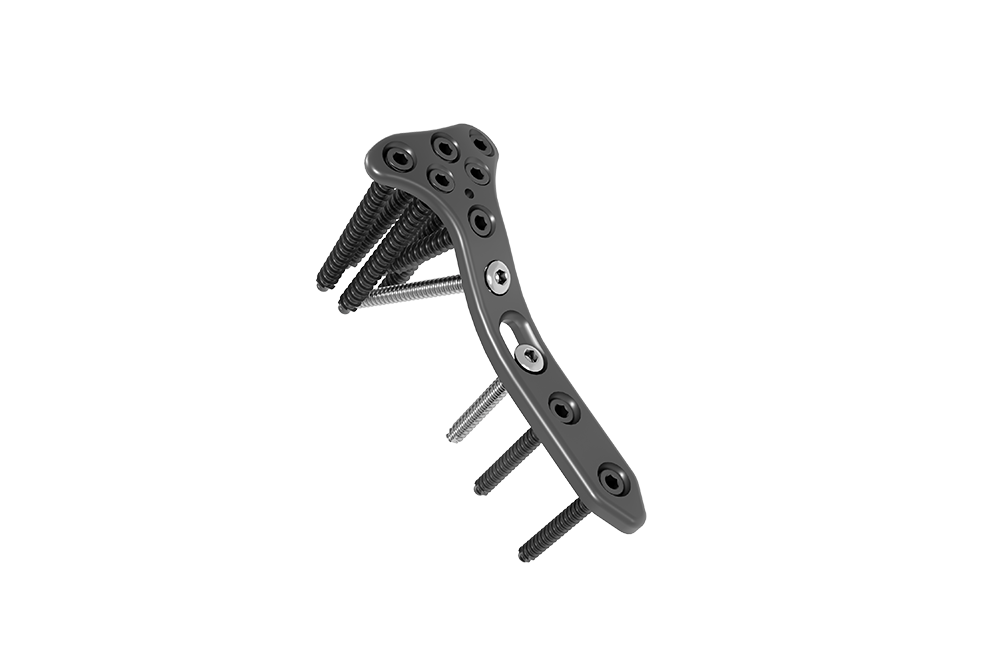
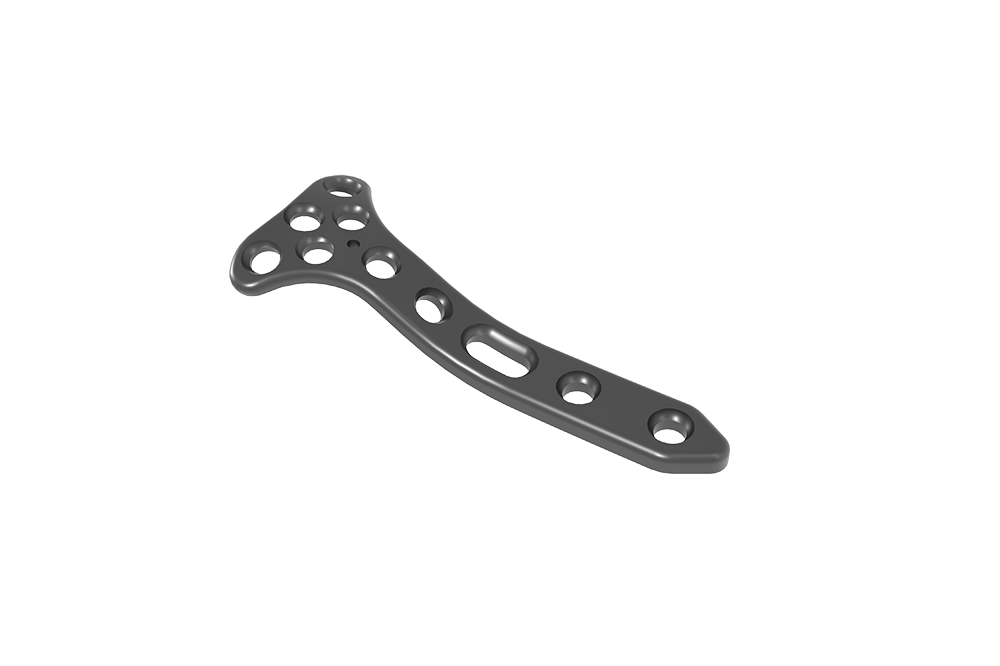
The ITS. Proximal Medial Tibia Plate is an advanced osteosynthesis system designed for treating various proximal tibia fractures, including complex C1 to C3 fractures when combined with the Proximal Lateral Tibia Plate.
A special feature of this system is the freely selectable hole configuration, which makes it possible to choose locking or non-locking screws for each hole (except compression and oblong holes). With an angle selection of +/- 15°, the system offers particular versatility, especially for complex fractures.
- Multi-directional Locking
- Anatomical plate design
- 5 proximal plate holes for peri-articular fixation
- Oblong hole for optimal positioning and alignment of the tibia length
- Pointed distal plate end for percutaneous insertion
- Pre-angled proximal shaft hole for additional support of the periarticular area
- Locking screw placement parallel to joint to enable a rigid buttress platform
- Plate strength transition from 3.5mm to 2.0mm in the proximal part in order to minimize soft tissue irritation
- Plate lengths: 4, 7-hole

Distal Anterolateral Tibia Locking Plate (DTL)
The ITS. Distal Anterolateral Tibia Locking Plate is a reliable osteosynthesis system designed for treating a range of distal tibia fractures.
A special feature of this system is the freely selectable hole configuration, which makes it possible to choose locking or non-locking screws for each hole (except compression and oblong holes). With an angle selection of +/- 15°, the system offers particular versatility, especially for complex fractures.


- Multi-directional Locking
- Anatomically shaped
- Torsion and contour of the plate shaft has been adapted to that of the distal tibia
- 4 distal plate holes for fixation close to joint
- Oblong hole for optimal positioning and alignment of the tibia length
- Pointed proximal plate end for percutaneous insertion
- Left/right version
- Plate lenghts: 7, 11, 15, 19-hole

